Also known as: Parrott shell, Parrott shot.
| Class | Rifled-artillery projectile family |
|---|---|
| Associated inventor | Robert Parker Parrott |
| Forms | Shell, case shot, solid shot, chilled-head bolt |
| Common feature | Expanding cup or band at the base |
| Services | Army and Navy; field, siege, seacoast, and naval use |
Family-level classification
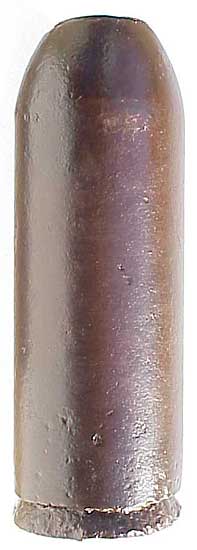
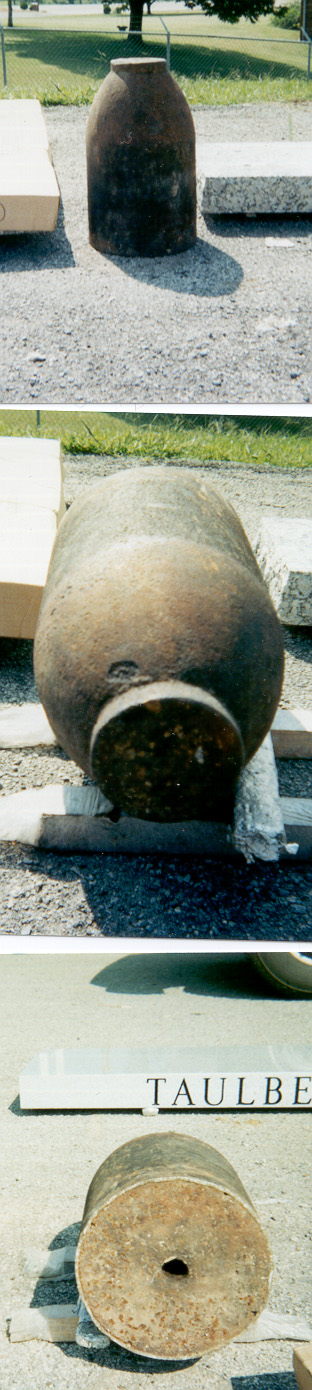
Parrott is a design-family attribution, not a complete object description. Catalog records should state both the functional type—shell, case shot, solid shot, or bolt—and the Parrott-system attribution, then record caliber and base construction.
Patent and procurement evidence
Parrott's August 20, 1861 patent documents a projectile for rifled ordnance. Congressional and Ordnance Department records add contract, quantity, caliber, inspection, and dispute evidence that cannot be recovered from the patent drawing alone.
Sources & further reading
- Robert P. Parrott. Projectile for Rifled Ordnance. U.S. Patent 33,099, August 20, 1861.
- U.S. House of Representatives. Contracts for Ordnance, Projectiles, and Small Arms. 40th Congress, 2nd Session, Executive Document No. 99. Washington: Government Printing Office, 1868.
- United States Military Academy Ordnance Museum. A Descriptive Catalogue of the Ordnance Museum at West Point.
- Hackley, Frank W. Civil War Explosive Ordnance. Revised November 10, 1960. U.S. Naval School, Explosive Ordnance Disposal.