Desirability Criteria
What Makes It Desirable?
I am often asked "Why is this shell more desirable than that one?" To help answer this important question, I have listed below the factors which should be used to determine the relative values of Civil War projectiles.
Condition
Condition is extremely important because a rare projectile in poor condition can be of less value than a common projectile in excellent condition.
The projectile's overall appearance must be considered in value determination. A projectile in poor condition will exhibit large, deep pitting, heavy metal flaking, and is overall unstable. Fair projectiles will have medium pitting, not greater than 1/4 inches deep or wide, and will be in overall stable condition. A projectile in good condition - the average condition of excavated specimens - will have light to medium pitting, not exceeding an average of 1/8 inches deep or wide, and will have some surface flaking. Fine condition projectiles exhibit a nearly smooth surface, with only slight pitting not greater than 1/16 inches deep or wide. Projectiles in excellent condition are usually non-excavated specimens or early battlefield pickups and will be in a pristine state.
Whether the projectile is cleaned, disarmed (if it is a shell), professionally restored, and coated to retard rust are also factors used to determine value.
Rarity
A projectile which was manufactured in large quantities and is easily obtained is considered very common. The 12-pounder solid shot is an excellent example of this category. A projectile which is found in reasonable quantities but requires some effort to obtain is deemed common. The Federal 10-pounder Parrott is a common projectile. A projectile that is found less often but still available is considered less common. Examples are the Federal 3.8-inch James sub-pattern II and 3-inch Confederate Read projectiles. A projectile that is hard to come by, but still occasionally found, is considered rare; for example, Federal and Confederate stands of grape or the 10-pounder Confederate Brooke projectiles. A projectile which was manufactured in small quantities and is almost never available is considered extremely rare. Examples are the 3-inch Armstrong projectile or the Confederate 3-inch Mullane (Tennessee-sabot) side-loader. A projectile that is one of a kind is considered unique.
Completeness
The significant questions to consider are:
(1) Was the projectile designed to have a fuze? If so, is the fuze present and intact?
(2) Was the projectile manufactured with a sabot? If so, is the sabot intact, bent, pushed, or deformed?
(3) Does the projectile body have any attached bolts, nuts, plates, nails, or screws? If so, are they broken, missing, or otherwise damaged?
Type of Projectile
A solid shot (sometimes known as a bolt in rifled projectiles), shell, canister, and/or stand of grape will have different values. Some solid shot patterns can bring a premium, whereas the same pattern with a fuze may be of more or less desirable, depending upon the fuze type.
Type of Fuze, Sabot, or Interior
The type of fuze used will greatly effect the desirability. As a rule, projectiles with percussion, concussion, and experimental fuzes will bring more than those with time fuzes. A projectile with a brass or copper sabot will be more desirable, than one with an iron sabot. The variety of the sabot within the patterns will also affect the projectile's desirability. An interior that is polygonal or segmented will bring more than a smooth-interior specimen.
Caliber or Size
The most common field artillery calibers extensively used were the following: for rifled projectiles 2.9-inch (10-pounder) and 3-inch; for smoothbore projectiles 4.62-inch (12-pounder). Larger, seldom-seen smoothbore projectiles will be extremely desirable. Odd or limited production rifled projectiles in unusual calibers, will command a higher premium. The 2.25-, 2.5-, 2.6-, and 3.3-inch, are examples of these projectiles.
Excavated or Non-Excavated
In general, a non-excavated projectile will be more desirable than the same projectile in an excavated condition. The exceptions are those fired projectiles with good rifling and in excellent condition. In addition, a late war projectile will bring more if it is an excavated specimen. The 3-inch Hotchkiss with the 14-second Bormann fuze is one example of a late war projectile which brings a premium if it is excavated.
Aesthetic Appeal
A projectile with visual appeal will also have desirability. The way the rifling looks on the sabot, the condition of the surface of the metal, and the patina will add to or subtract from the desirability.
Geographic Location
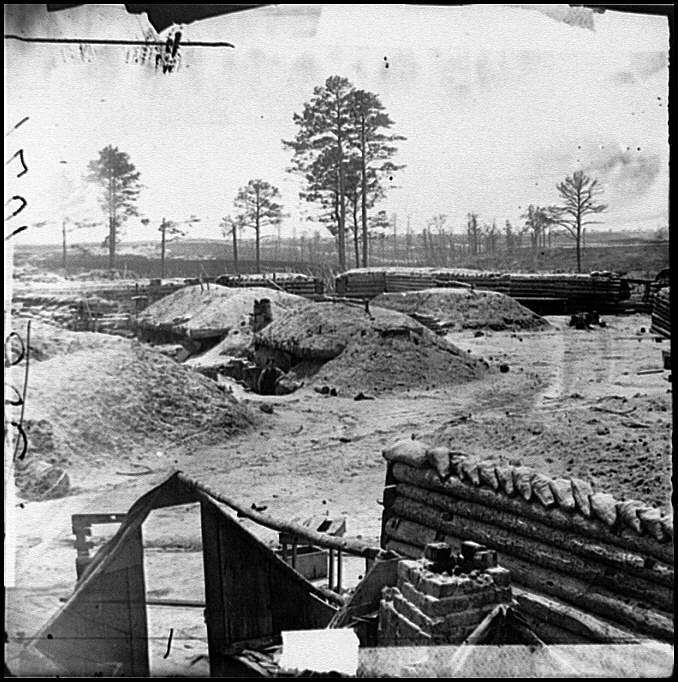
A specimen from a particular battlefield (Gettysburg, Petersburg, Vicksburg, etc.) will be of special interest to a person who collects artifacts from that area. Projectiles from specific campaigns, mountains, rivers, cities, and battlefields can, if documented, add considerably to the desirability of a projectile.
Affiliation With a Specific Unit
Unit histories combined with a proven geographical association, will add to the value of any projectile. In some cases, Confederate projectiles which were fired by well-known artillery units will bring a premium price. Some units used only a particular size caliber or pattern of a projectile, and this adds to the specimen's desirability.
Country of Origin
In many cases, the Confederates made copies of, or altered, Federal projectiles. As a general rule, these are more desirable than the same style of Federal projectiles. These copied projectiles bring a premium price over their Federal counterparts. Although both sides had access to British manufactured projectiles, the majority were used by the Confederates.
Summary
When considering the purchase of a projectile, all the above factors should be considered. Even though a projectile may be extremely rare, condition and desirability along with aesthetic appeal can and will determine the ultimate value.
It is hoped that this guide will help the collector to assess the relative value of a projectile and make an intelligent decision regarding its purchase or sale.
No authors or collectors can possibly assign an accurate numerical rarity scale due to the vast quantities of projectiles yet to be discovered. We have made an educated guess in the development of our rarity scale. The immense number of projectiles in private collections, museums, and the unknown quantities still to be recovered make a rarity scale relatively inaccurate.
- Jack W. Melton, Jr.